Percentages and Decimals
How to Calculate a Percentage
Learn how to calculate a percentage with the formula, 3 methods, worked examples and a free percentage calculator. Includes practice problems and answers.
Free guides to percentages and decimals: how to calculate a percentage, convert fractions to decimals and percents, plus a percentage calculator with steps.
Learn how to calculate a percentage with the formula, 3 methods, worked examples and a free percentage calculator. Includes practice problems and answers.
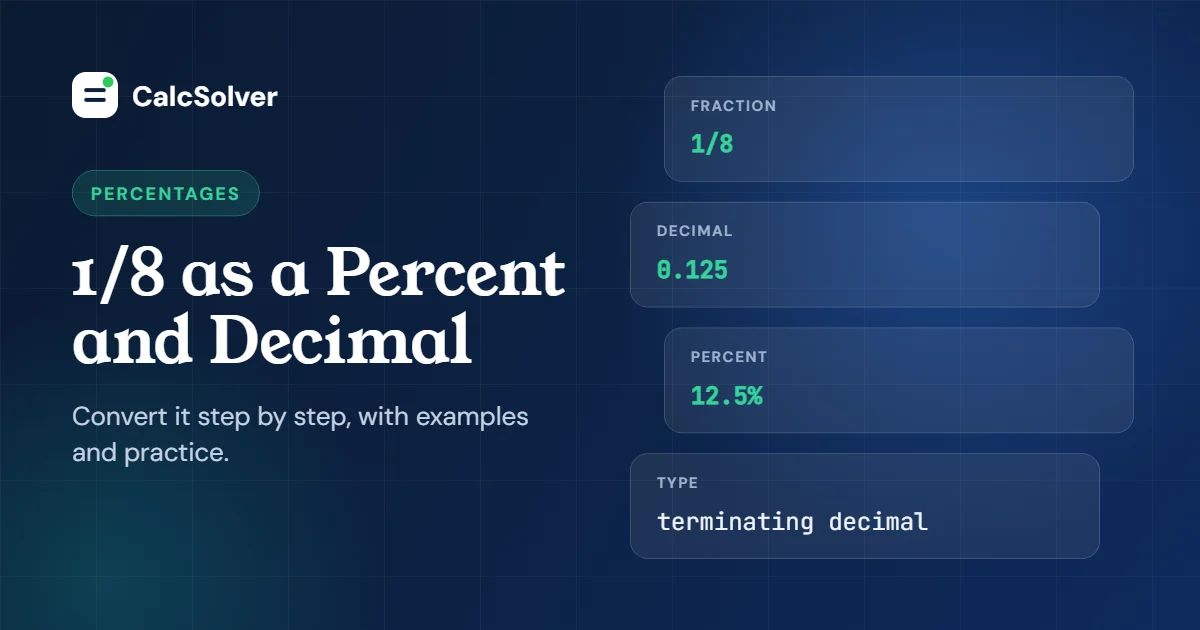
1/8 as a decimal is 0.125 and as a percent is 12.5%. See how to convert it step by step, with a diagram, worked examples, practice…
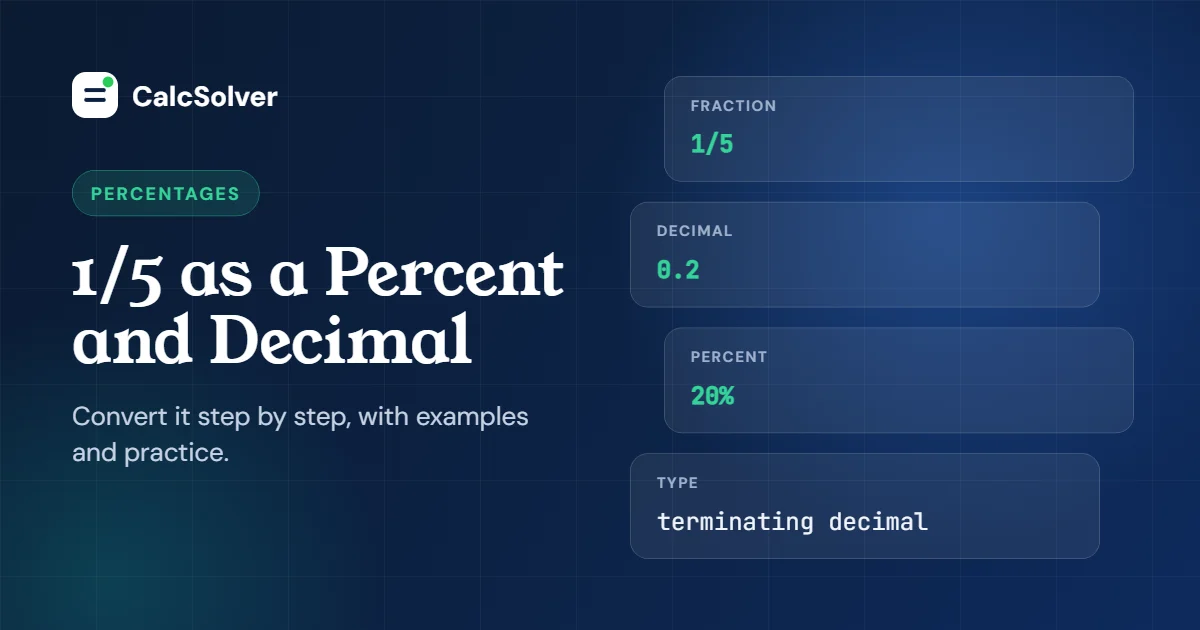
1/5 as a decimal is 0.2 and as a percent is 20%. See how to convert it step by step, with a diagram, worked examples, practice…
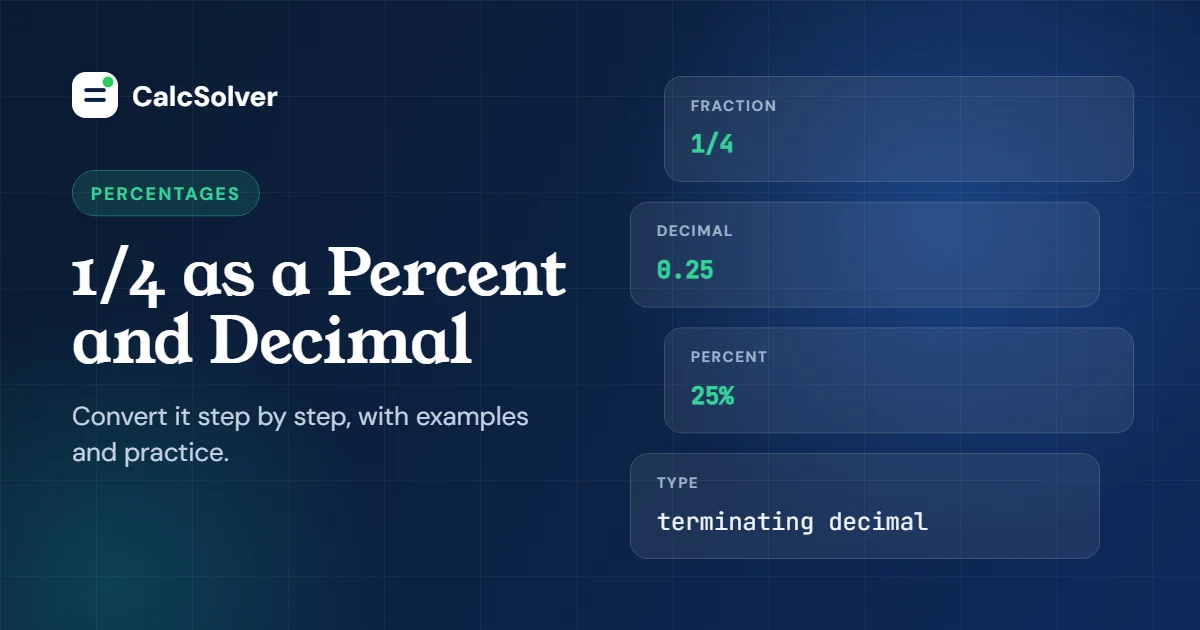
1/4 as a decimal is 0.25 and as a percent is 25%. See how to convert it step by step, with a diagram, worked examples, practice…
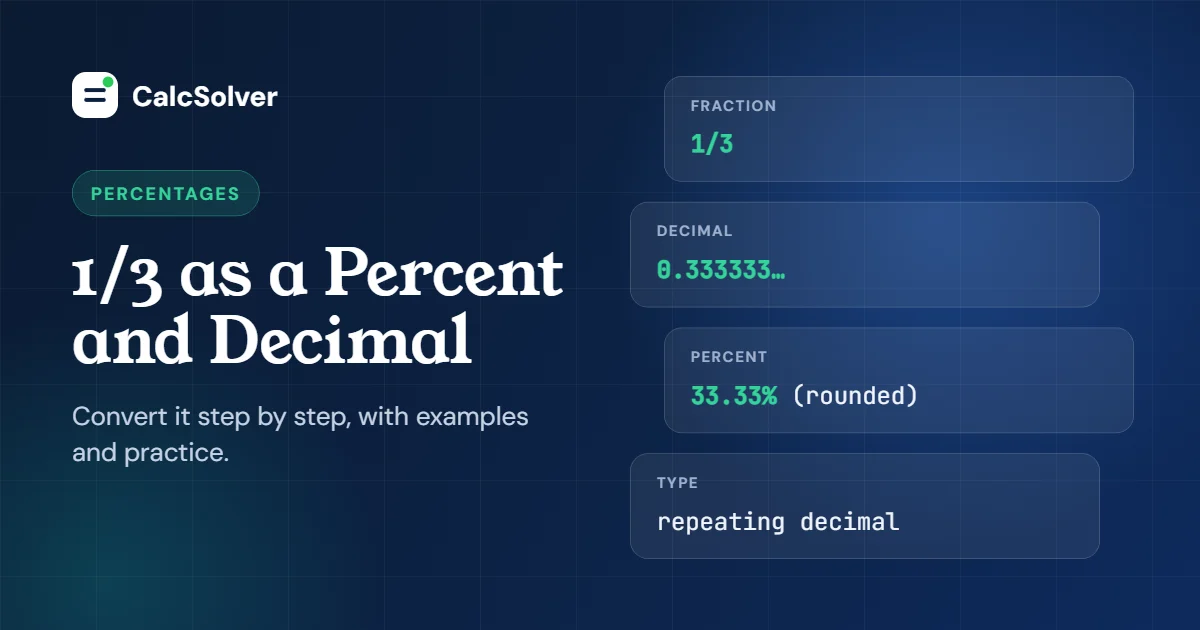
1/3 as a decimal is 0.333333… and as a percent is 33⅓% (about 33.33%). See how to convert it step by step, with a diagram, examples…
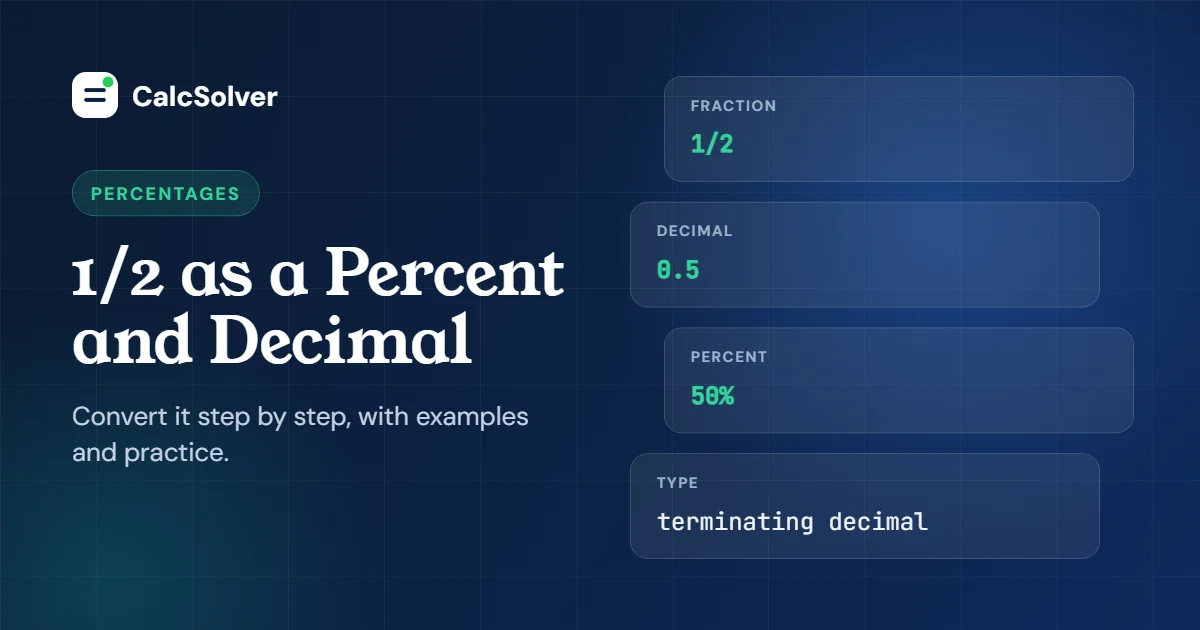
1/2 as a decimal is 0.5 and as a percent is 50%. See how to convert it step by step, with a diagram, worked examples, practice…
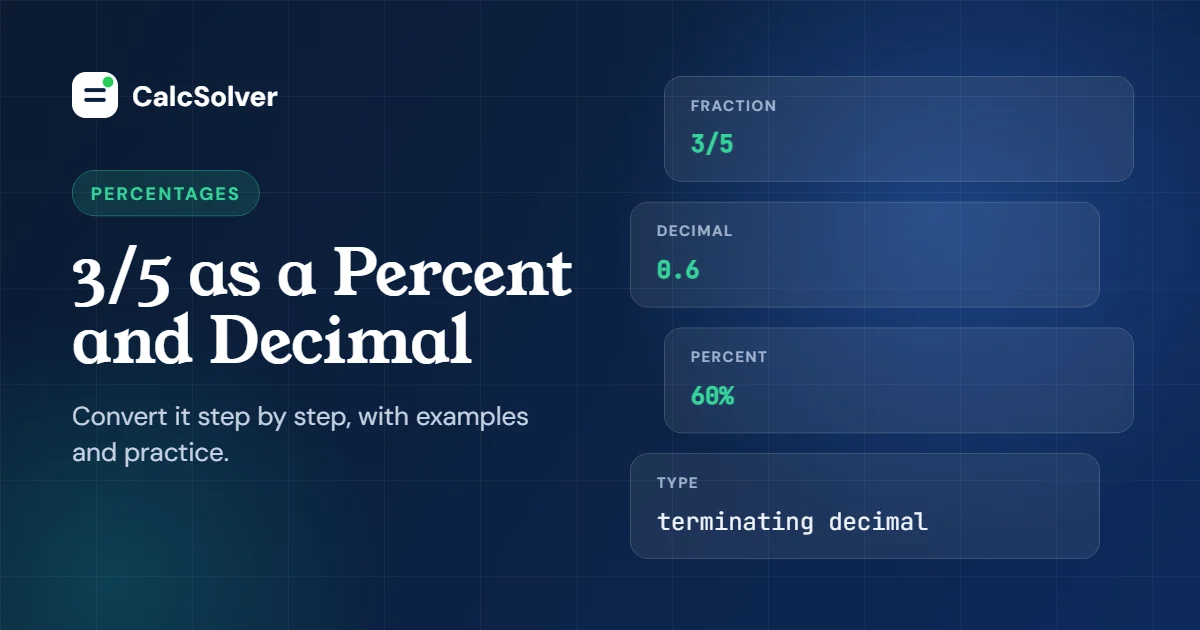
3/5 as a decimal is 0.6 and as a percent is 60%. See how to convert it step by step, with a diagram, worked examples, practice…
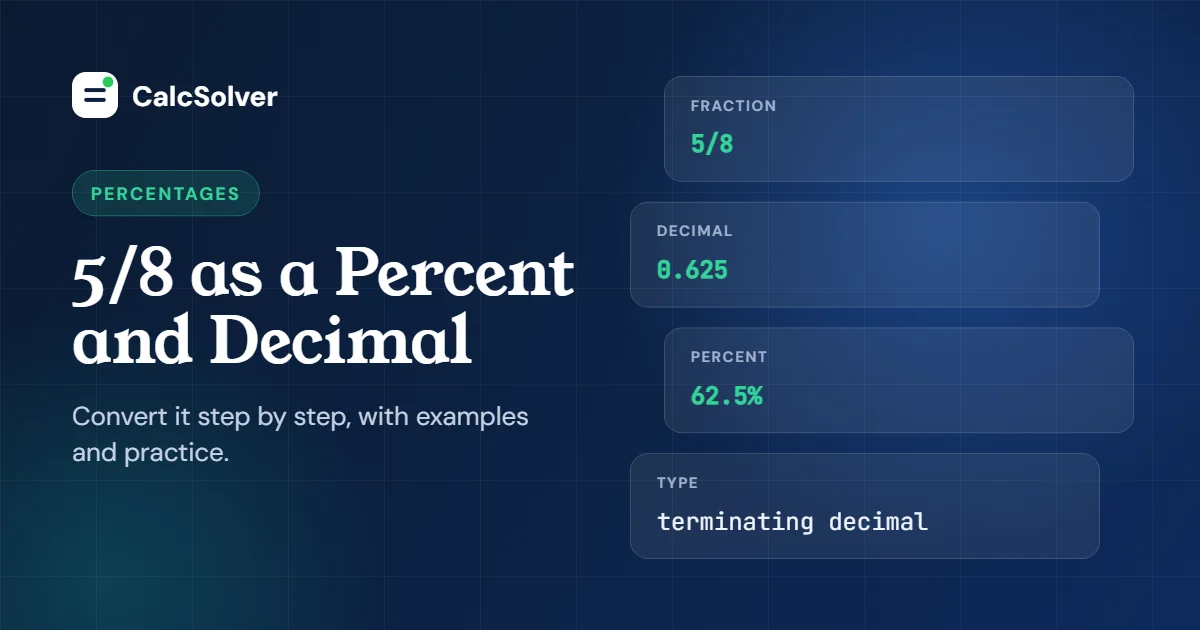
5/8 as a decimal is 0.625 and as a percent is 62.5%. See how to convert it step by step, with a diagram, worked examples, practice…
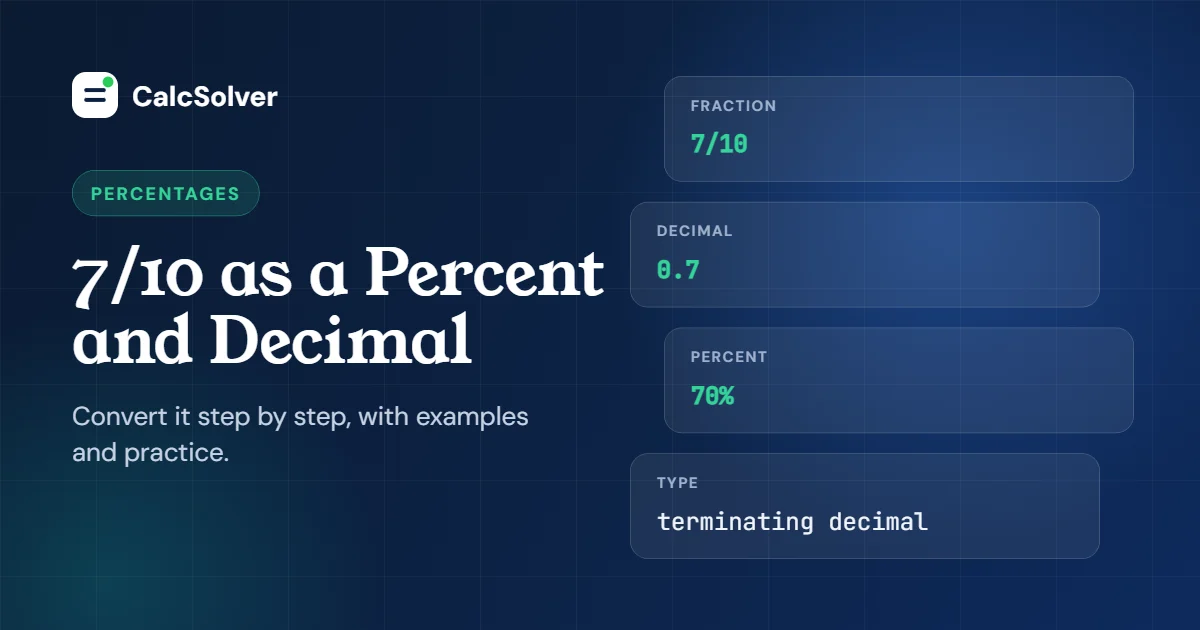
7/10 as a decimal is 0.7 and as a percent is 70%. See how to convert it step by step, with a diagram, worked examples, practice…
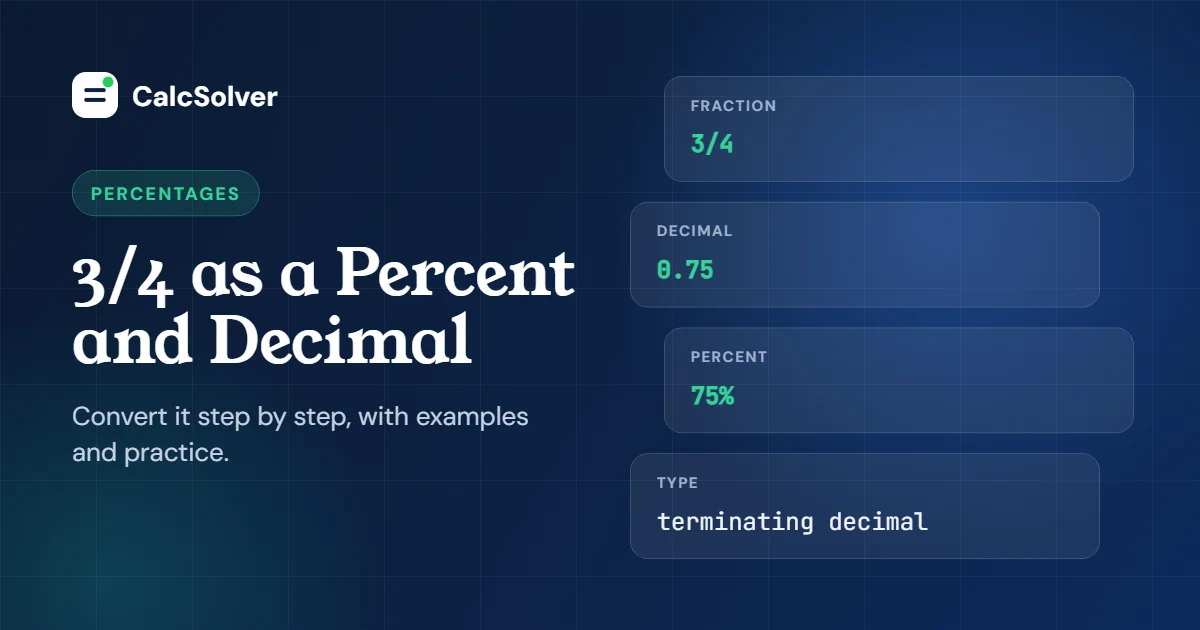
3/4 as a decimal is 0.75 and as a percent is 75%. See how to convert it step by step, with a diagram, worked examples, practice…
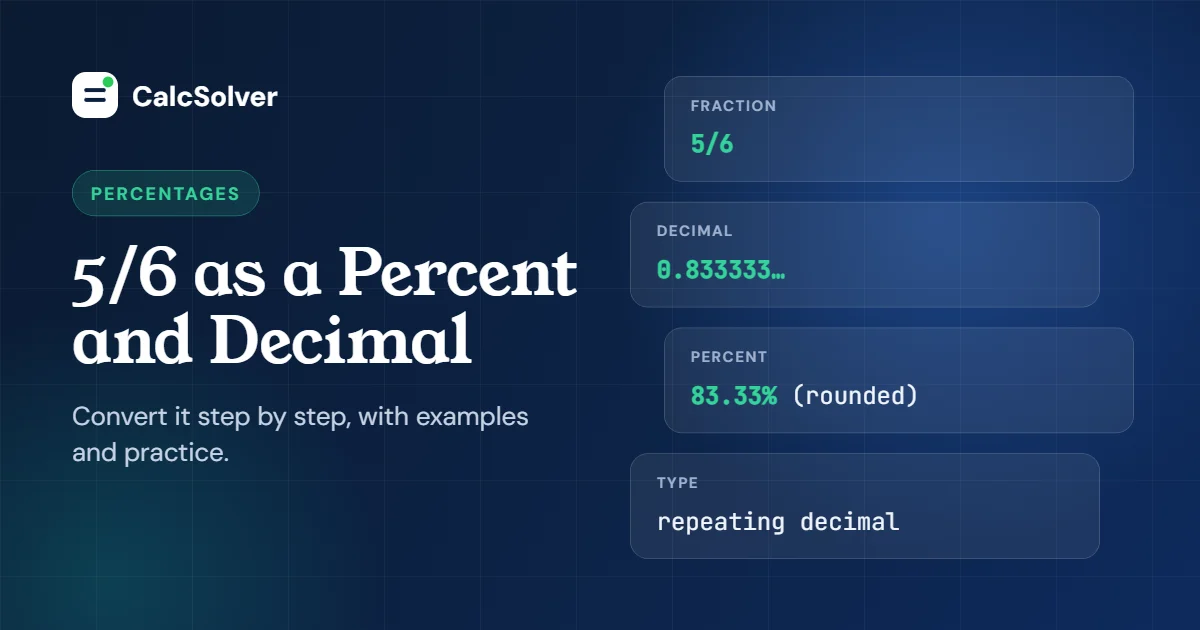
5/6 as a decimal is 0.833333… and as a percent is 83⅓% (about 83.33%). See how to convert it step by step, with a diagram, examples…
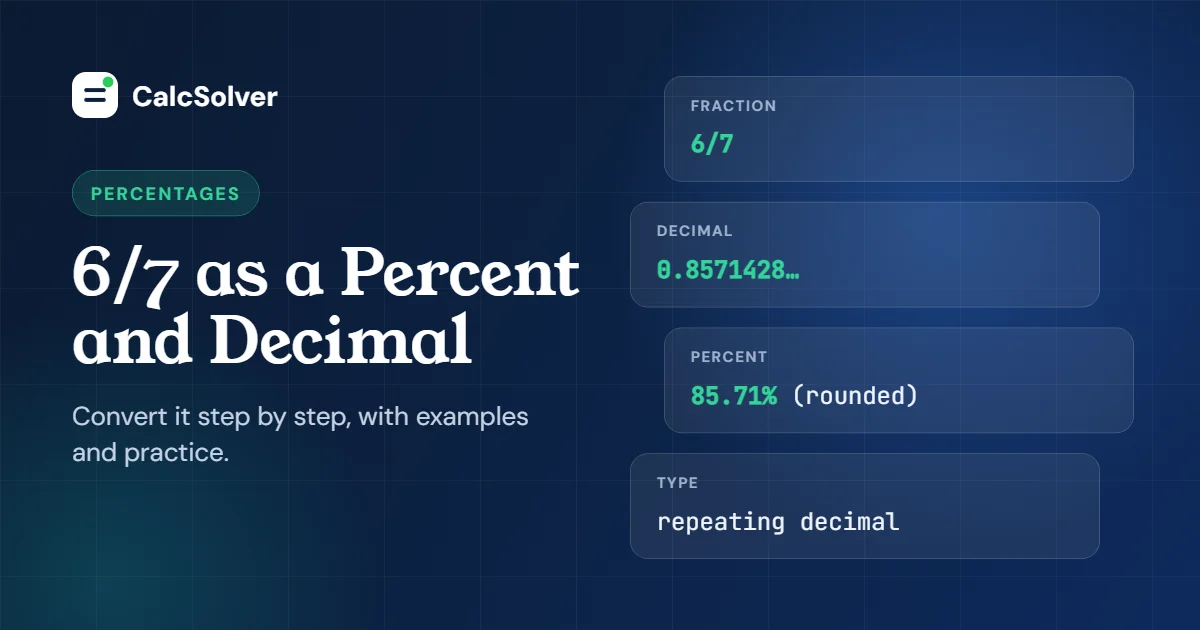
6/7 as a decimal is 0.8571428… and as a percent is 85 5/7% (about 85.71%). See how to convert it step by step, with a diagram,…
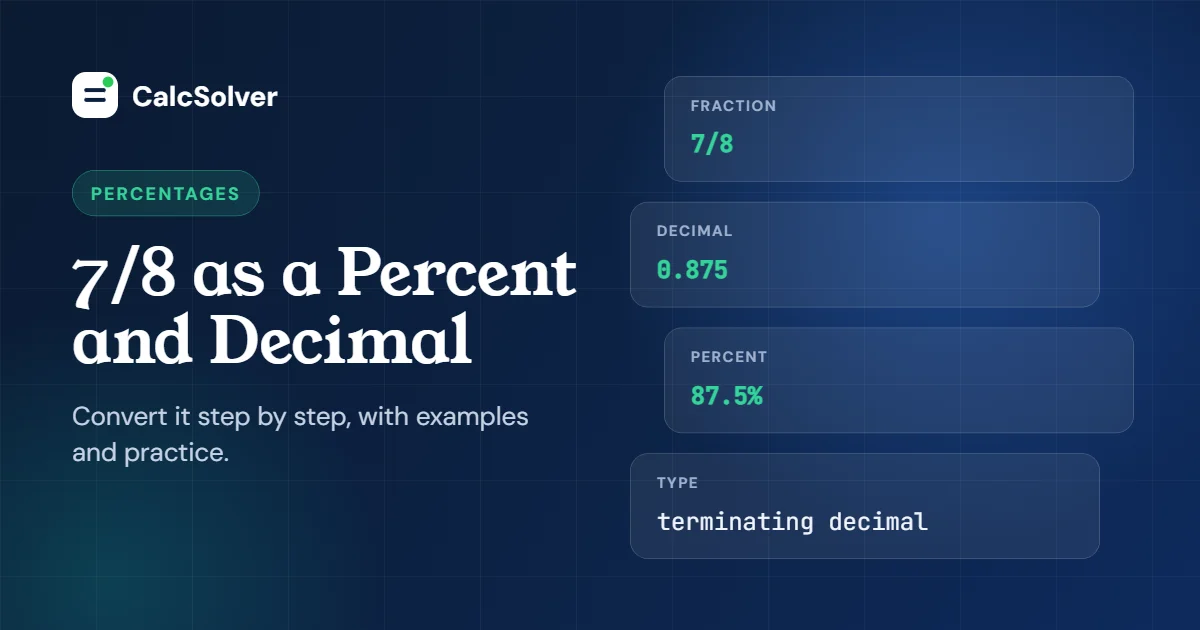
7/8 as a decimal is 0.875 and as a percent is 87.5%. See how to convert it step by step, with a diagram, worked examples, practice…
A percentage is a number out of 100, so 25% means 25 out of every 100. A decimal shows the same amount in base ten, so 25% = 0.25 = 1/4. Fractions, decimals and percents are three ways of writing one value, and you switch between them by dividing or multiplying by 100. To calculate a percentage of a total, divide the part by the whole and multiply by 100.
In short: Percent means per hundred. Decimal to percent: multiply by 100. Percent to decimal: divide by 100. Fraction to decimal: divide the top by the bottom.
Select a fraction to see both conversions step by step, with a diagram, examples and practice problems.
| Fraction | Decimal | Percent |
|---|---|---|
| 1/8 | 0.125 | 12.5% |
| 1/5 | 0.2 | 20% |
| 1/4 | 0.25 | 25% |
| 1/3 | 0.333… | 33⅓% (≈ 33.33%) |
| 1/2 | 0.5 | 50% |
| 3/5 | 0.6 | 60% |
| 5/8 | 0.625 | 62.5% |
| 7/10 | 0.7 | 70% |
| 3/4 | 0.75 | 75% |
| 5/6 | 0.833… | 83⅓% (≈ 83.33%) |
| 6/7 | 0.857142… | ≈ 85.71% |
| 7/8 | 0.875 | 87.5% |
A fraction in simplest form gives a terminating decimal only when its denominator has no prime factors other than 2 and 5. Fractions such as 1/3 and 6/7 give repeating decimals.
In short: Divide to go from fraction to decimal, then shift the decimal point two places right for the percent. Reverse the steps to go back.
Divide the part by the whole and multiply by 100. For example, 18 out of 72 is 18 ÷ 72 × 100 = 25%.
Divide the numerator by the denominator to get a decimal, then multiply by 100. For example, 5/8 = 0.625, and 0.625 × 100 = 62.5%.
A fraction in simplest form has a terminating decimal only if its denominator’s prime factors are 2s and 5s. Any other prime factor, such as 3 or 7, makes the digits repeat forever, as in 1/3 = 0.333… and 6/7 = 0.857142857….